UNCANNY: The Woman Philosopher Who Defied All Odds - Hypatia
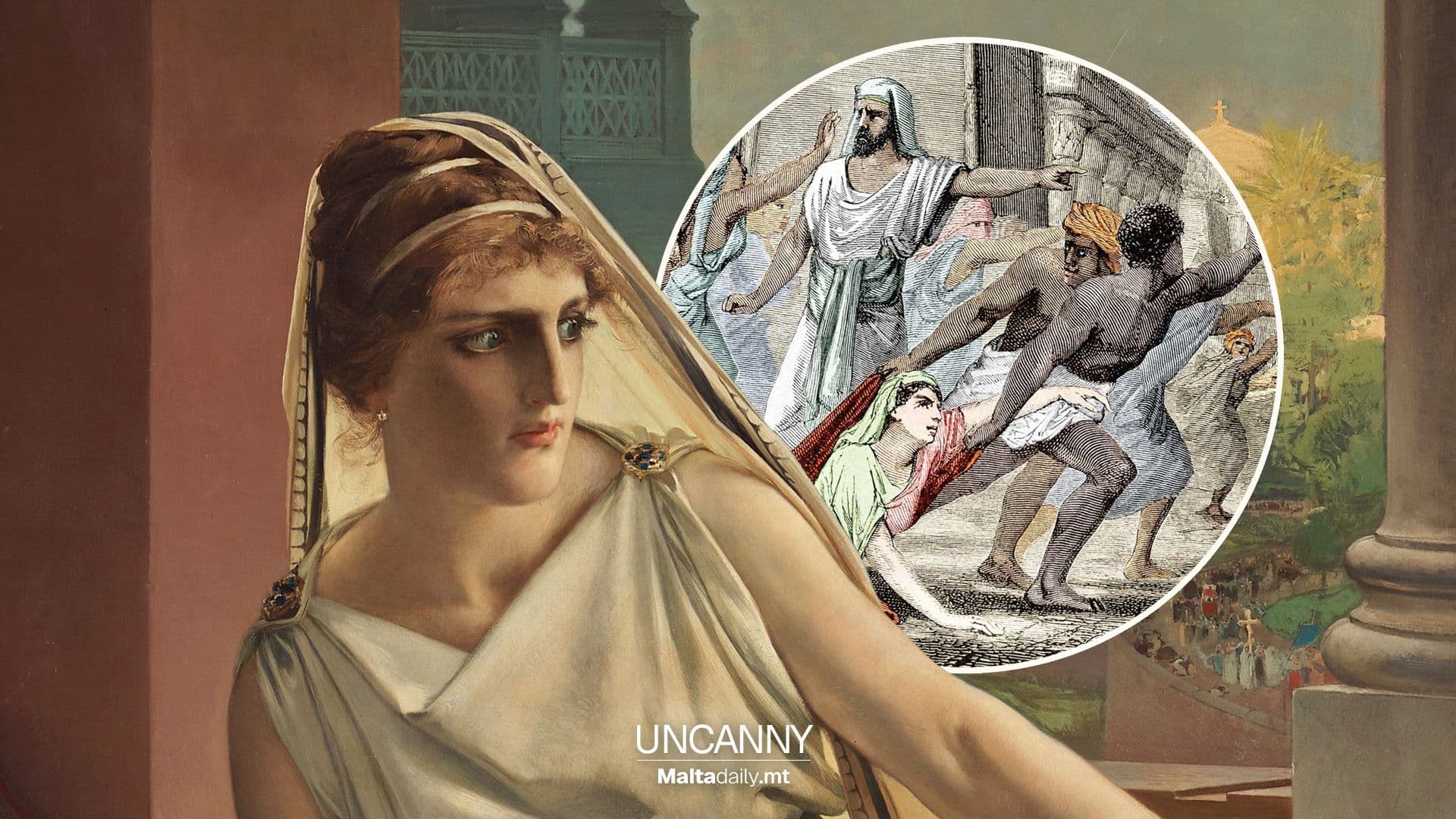
The canons of philosophy are very much male dominated, whether it’s Socrates or Decartes, Plato or Nietzsche.
However, some figures stand out in such a way as to dissolve this patriarchal view of history & philosophy.
One of these figures, Hypatia of Alexandria, became not only a ‘martyr for science’, but a personification of tensions in antiquity.
Her death at the hands of a Christian mob became a defining moment in late antique cultural conflict.
To understand her story, we need to look at Alexandria, a centre for scholarship with a very diverse urban population.
The schools there produced some of the greatest Christian and pagan thinkers in history, as well as those of other traditions.
Hypatia was probably born between 350 and 370 CE as the daughter of the mathematician Theon of Alexandria.
The leader of a respected school preserving classical knowledge, Theon lay the footsteps for Hypatia to follow in.
Her education saw her master philosophy, mathematics and astronomy, as well as developing a daring and virtuous character.
She was praised for her composure, described by Socrates Scholasticus as not being afraid to join assemblies of men.
Sources indicate that she taught within a Platonic tradition, developed by the
3rd century philosopher Plotinus.
Hypatia became sought for her teachings on a wide range of subjects, no less for her commanding presence.
Despite being pagan, she was also known for her relationships and tolerant interactions with Christians.
Synesius of Cyrene, who later became a respected Christian bishop, is noted to have been one of her many students.
Not only is she credited with writing commentaries on scientific & philosophical works, but even working on instruments herself.
Hypatia is thought to have constructed astrolabes and hydrometers to support her astronomical studies.
Her improvements on these tools led her to innovate in thought and this led her to become a sought after political counsel.
However, it was this, and the death of Bishop Theophilus in 412 that would unfortunately lead to her demise.
Theophilus’ nephew Cyril eventually secured the bishopric and began reshaping the city’s religious landscape.
His policies are known to have alienated several factions and groups in Alexandria.
The Roman prefect Orestes openly clashed with Cyril after disputes involving civil unrest.
Cyril was condemned for his actions against Jewish communities, with Orestes seeking imperial support to address the issues.
In his mission, Orestes sought advice fromHypatia, leading to rumours of her involvement in a lack of reconciliation.
She was even accused of being linked to witchcraft due to her pagan beliefs.
It all came to a head during Lent of 415, when a large group of angry Christians confronted her carriage.
Hypatia was dragged to the Kaisarion, a former pagan temple that had become a Christian institution.
The mob brutally murdered her using pottery shards as make-shift cutting weapons.
Her body torn apart, Hypatia was burned outside the city as if she was a criminal, despite her not having committed such crimes.
The killing was a shock to many, pagan and Christian, with the blame placed on Cyril’s influence.
The bishop denied his responsibility, but imperial authorities questioned the conduct of his followers.
An edict soon restricted the parabalani, the group of clerics under Cyril’s authority, who had played an aggressive role in earlier conflicts.
Still, Cyril regained influence and secured dominance within the Alexandrian council.
Orestes’ support after Hypatia’s murder gradually collapsed, with the prefect eventually leaving the city.
As is often the case with such a riveting story, Hypatia became romanticised and a symbol.
Films like Agora, starring Rachel Weisz, revived Hypatia but took artistic liberties in her portrayal.
This was in line with Enlightenment and secular thinkers championing Hypatia as a martyr for science and rationality.
Despite keeping her memory alive, such mischaracterisations tell us more about our ideas about science & philosophy versus religion and superstition.
A look at Hypatia’s Neoplatonic tradition would immediately throw these categories into question.
In his book ‘Magisteria, The Entangled Histories of Science and Religion’, Nicholas Spencer argues that Hypatia was a victim of ‘the perennially ferocious power politics of Alexandrian society.’
Let us know what you think about Hypatia below!
#MaltaDaily