UNCANNY - The Religion Based Around Star Wars: Jediism

When we think about religion, we often imagine ancient traditions with established institutions based around spiritual concepts such as God and the afterlife,
But what if there was a religion based around a film franchise? Something like, say, Star Wars?
In 2001, over 390,000 people in England and Wales responded to a census asking about their religious adherence with ‘Jedi’.
While 0.8% of the populations doesn’t sound like much, it still managed to surpass Sikhism, Judaism and Buddhism, three of the world’s largest faith traditions.
It probably helped that citizens were not liable for a fine if they refused or neglected to state any particulars in respect of religion.

Now, our first instinct is to treat it as a joke. And for many respondents, this was probably the case.
However, diving deeper into the issue, we not only find that some people sincerely adhere to a religion based around Star Wars…
But investigating this further helps us understand just how diverse and fluid the very notion of ‘religion’ is.
In fact, in 2007, 23 year old Daniel Jones founded the Church of Jediism.
In 2009, Jones was removed from a store in North Wales for refusing to remove his hood on a religious basis. This was serious stuff for Jones.
In 2005, the Temple of the Jedi Order was registered in Texas and even got IRS tax exemption in 2015 on religious grounds!
Attempts at denying Jediism being actually deemed a religion ended up creating the sorts of social back-and-forth often caused by ‘actual’ religions.
But that’s not the only way Jediism could be taken seriously as a religion.
From a religious studies perspective, Jediism ticks many of the boxes one can require a religion to tick, including spiritual practice and beliefs.
Jediism doesn’t really have an institutional structure to turn back on when it comes to canon texts or beliefs. But that simply works in its advantage, allowing serious practitioners the freedom to relate to the religion in their own particular ways.
Some are open to the existence of an actual Force, a metaphysical power within the Star Wars fictional franchise.
In the fictional world, the Jedi learn to use the Force through rigorous self-discipline and mindfulness practice.
And while not every Jediist can or does expect to cultivate telekinetic power, the ‘required’ practices offer a rigorous spiritual recipe.
Some Jediist prayers have even been compared to more common Christian recitations. This is syncretism at work.

Syncretism is the act, sometimes deliberate, sometimes not, of blending aspects of cultural phenomena together into something new.
All religions engage in syncretism in one way or another. What makes Jediism different is the fact that the raw material from where they draw their inspiration.
That ‘material’ is a copyrighted franchise owned by Lucasfilm.
This puts Jediism in a bit of a difficult situation as they cannot fully use the Star Wars material in ways that would trigger lawsuits.
However, this never stopped fans of Star Wars (Jediist or not) from creating fan-fiction and dedicated fandoms.
Some scholars consider this a form of hyper-real religion: religions and spiritualities that mix elements of religious tradition with popular culture.
The advent of pop culture and media empires and its use is not a very solid foundation to deny an emerging and popular cultural phenomenon the designation ‘religion.’
It might offer institutional hurdles, such as when the Charity Commission for England & Wales rejected an application to grant charitable organisation status to the Temple of the Jedi Order in 2016.
But this does not stop enthusiasts from taking their chosen religious tradition seriously.
Jediism is far from the only franchise to garner a religious following.
Other franchises such as Harry Potter or The Matrix managed to create such religious movements.
Others formed around real life personalities, such as the Church of Maradona which deified Diego Armando Maradona (nicknamed ‘The Hand of God’).
Others could be a clearer parody of religious traditions, such as The Church of the Flying Spaghetti Monster.
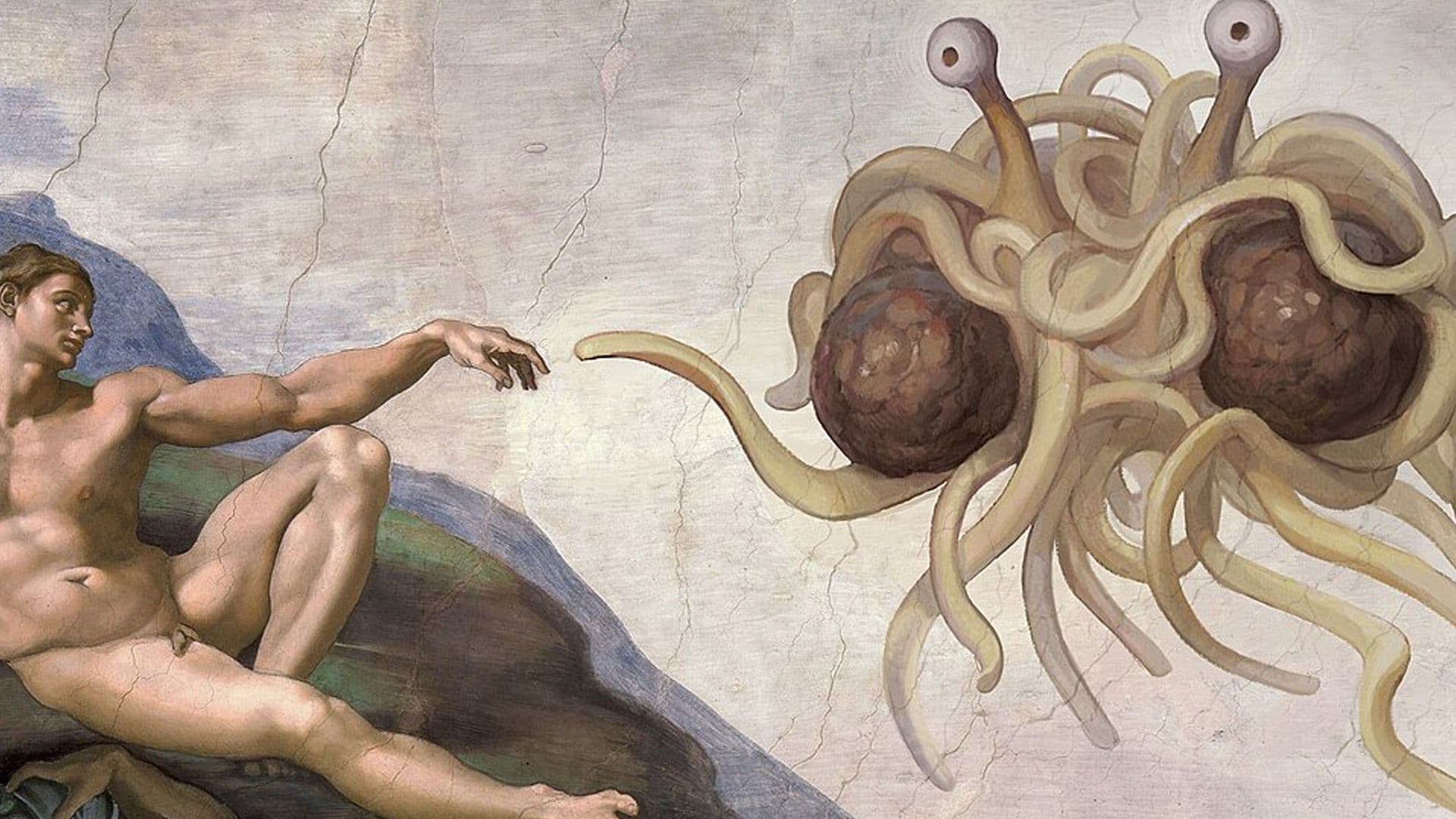
Here, irony functions as a tool that critiques religious institutions when they step on secular grounds
But this ‘religious’ cultural production is only perceived as different due to it taking place in a post-modern, highly technological age.
If anything, Jediism shows us that humans are meaning-seeking creatures, and a franchise as impactful as Star Wars was not immune from the cultural creativity we exhibit... even if it moves into the realm of the sacred.
What do you think of Jediism?
#MaltaDaily