UNCANNY - Santa’s Devilish Companion: Krampus
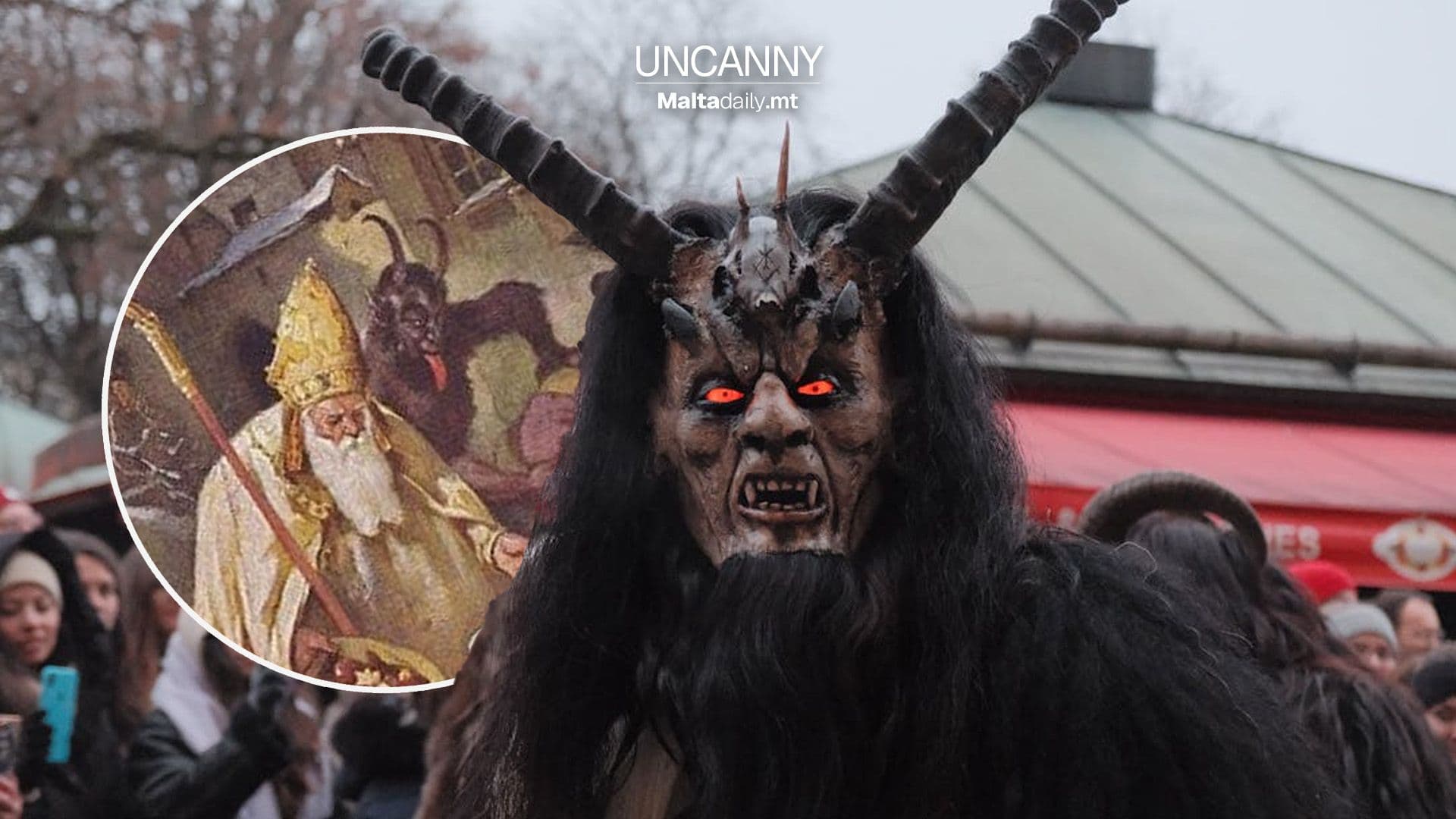
The Christmas season is often associated with the jolly Father Christmas, who brings gifts for kids around the globe.
Yet hidden in that idea, one might recall the idea that some kids, being on the naught list, receive coal.
But what if that naughty list was taken to another, monstrous extreme?European folklore preserves one such darker idea… and personified it.
This figure is Krampus, a horned, demonic companion to Saint Nicholas whose origins stretch deep into Alpine tradition.
Krampus emerged from pre Christian folklore in the mountainous regions of what is now Austria, southern Germany and parts of northern Italy.
Long before Christianity spread through the Alps, local communities marked the winter solstice with rituals tied to nature, fertility and the spirits believed to inhabit forests and mountains.
Many scholars believe Krampus developed from these pagan traditions, particularly from figures associated with wildness, chaos and the dangers of winter.
One may recall figures like Pan, the satyr god of panic and the wilderness. Another, closer to the Northern figures, is Cernunnos, another lord of nature. These links are however comparative, not direct.
With the arrival of Christianity, older beliefs were reshaped rather than erased. Krampus was absorbed into the Christian calendar as a counterpoint to Saint Nicholas.
However, the first attestation to Krampus came in the 16th century, with Christianity already being the dominant religion. Christian fear and understanding of things paganism likely contributed more to Krampus’ creation than did actual pre-Christian myth.
While the saint rewarded well behaved children, Krampus punished the disobedient, often depicted carrying chains, bells and a bundle of birch sticks.
By the late medieval period, Krampus had become a familiar figure in Alpine folklore. In Austria, Germany and parts of Switzerland, young men traditionally dress up as Krampus on Krampusnacht, celebrated on 5 December.
They parade through towns and villages, rattling chains, ringing bells and playfully chasing onlookers.
Church authorities periodically attempted to suppress such practices, viewing them as remnants of paganism, yet they endured at a local level.
During the 19th century, Krampus experienced a revival through postcards and illustrations, often exaggerating his grotesque features and spreading his visual identity beyond the Alps.
Europeans would start exchanging ‘Krampuskarten’, cards with humorous rhymes and poems featuring the horned character.
The tradition would suffer some set backs, with the Dollfuss regime prohibiting it after the 1932 election. This would not last however.
In the 20th and 21st centuries, Krampus celebrations have evolved into organised festivals and parades, particularly in Austria where entire towns hold Krampus runs.
He would go on to inspire pop culture horror films and fiction, persisting as the dark side of Christmas as imaginations run wild.
#MaltaDaily