UNCANNY - Before Monopoly, There Was The Landlord’s Game
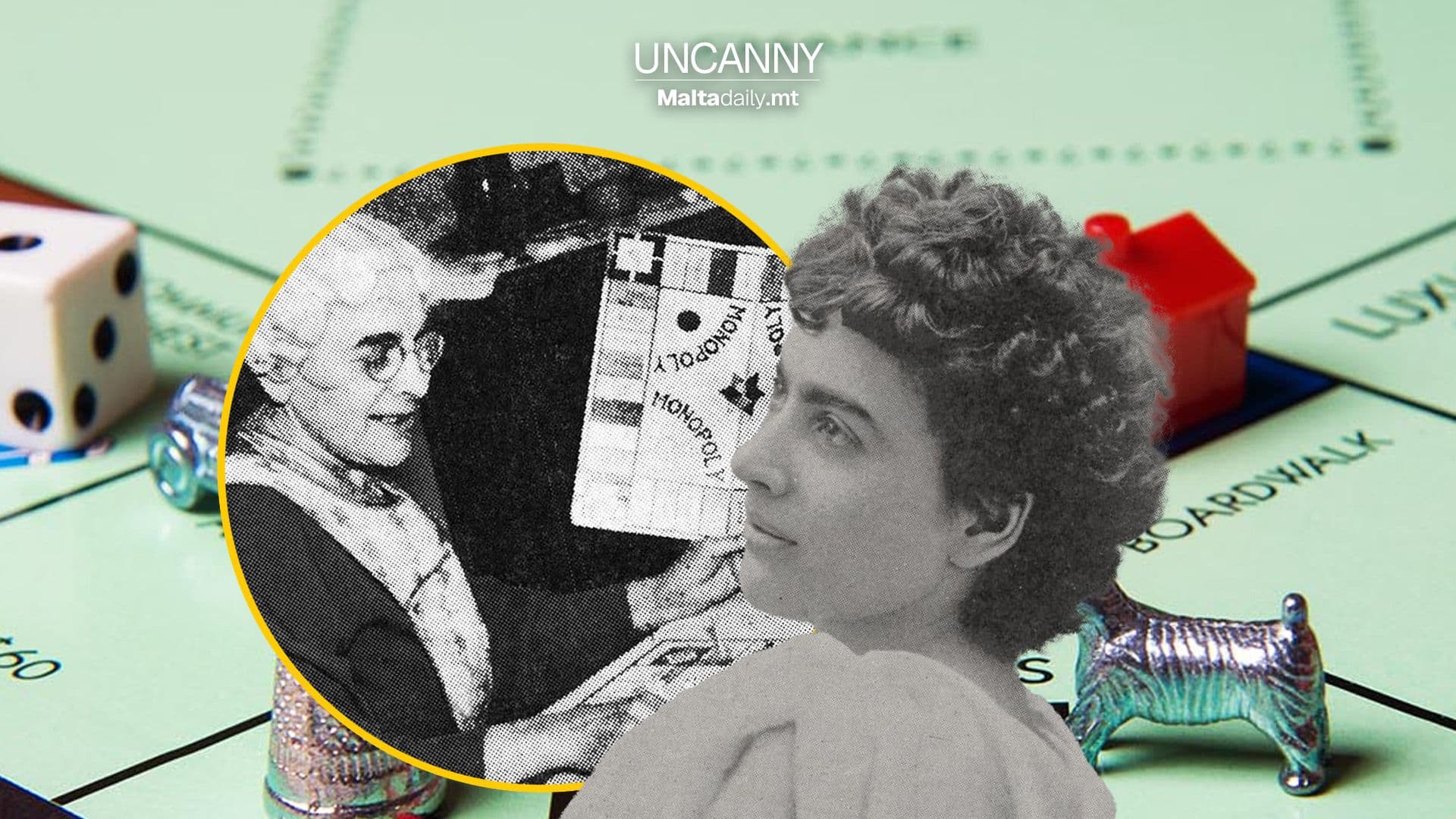
We’ve all played it and gotten maddeningly angry at each other whilst doing so - Monopoly.
A game all about purchasing and establishing financial domination over each other, the game has become, with its iconic mascot, a staple board game the world over.
However, what if there was a precursor to the game? And what if it had the opposite intention of Monopoly? And what if it was invented by a woman?
According to the familiar version, the game was invented during the Great Depression by Charles Darrow, an unemployed salesman from Philadelphia who turned an idea into a global phenomenon.
By selling Monopoly to Parker Brothers, the story goes, Darrow lifted himself out of poverty and helped rescue the company from financial ruin.
That history however glosses over a lot of details.
The true origins of Monopoly lie not with Darrow, but with a woman whose name was almost written out of history.
Her name was Elizabeth Magie, a progressive thinker whose life and ideas reveal a very different story behind one of the world’s most famous board games.
Born in rural Illinois in 1866, Magie grew up in a politically charged household. Her father, James Magie, was a newspaper editor and activist who travelled with Abraham Lincoln during his debates with Stephen Douglas.
He was also a strong supporter of women’s rights and social reform, values he passed directly to his daughter.
One book would prove especially influential. James Magie introduced Elizabeth to Henry George’s 1879 work Progress and Poverty, which argued that while people should own what they create, land itself should belong to everyone.
George proposed a land value tax as a way to curb inequality and reduce the power of wealthy landlords.
These ideas deeply shaped Magie’s worldview. At a time when women had limited rights and even fewer opportunities, she was outspoken, creative and unafraid to challenge social norms.
Struggling to survive on a low stenographer’s wage, she once placed a newspaper advert offering herself as a “young woman American slave” to highlight how marriage was often the only viable option for women.
The stunt made national headlines and carried a serious message about gender inequality.
By the early 1900s, Magie had moved to Washington DC. She supported herself independently, wrote poetry and short stories, performed on stage and spent her free time developing a board game designed to teach economic lessons.
In 1904, she patented The Landlord’s Game, a clear forerunner of Monopoly.
The patent included familiar elements such as railroads, property ownership, rent payments and even a “Go to Jail” space.
Crucially, Magie created the game as a critique of monopolistic practices, not a celebration of them. She designed two sets of rules.
One rewarded all players when wealth was shared fairly, while the other encouraged monopolies and ruthless domination. The contrast was deliberate.
Magie believed the cooperative model was morally superior and wanted players to experience the consequences of both systems.
The game spread organically, passed from group to group and adapted along the way.
It became popular among left-wing intellectuals, university students and Quaker communities, particularly in the north eastern United States.
The Quakers of Atlantic City added local street names and simplified the rules, helping shape the version recognised today.
It was this folk version of the game that Charles Darrow eventually encountered. He refined it further and sold it to Parker Brothers in the 1930s.
Seeking full control of the product, the company later bought Magie’s patent for a modest sum, along with two other game designs, effectively burying her role in its creation.
The truth only resurfaced decades later. In the 1970s, economist Ralph Anspach uncovered Magie’s patents while fighting Parker Brothers in court over his Anti-Monopoly game.
Magie reportedly made just $500 from her invention, but received no official credits for her work.
Anspach's research exposed what he called “the Monopoly lie” and restored Magie’s place in history.
Ironically, the game she designed to warn against monopolies became one of the most successful commercial products of all time.
Anspach himself was the creator of Anti-Monopoly game, with his work leading him to discover Magie’s patent battles.
Magie’s influence was felt beyond the story of Monopoly as she heavily contributed to the women’s movement and black people’s rights.
At a time when women were credited with less than 1% of all patents, Magie took it upon herself to push against these social conventions.
#MaltaDaily