Science In The City Returns With ‘Research, Resist, Reimagine’ Theme
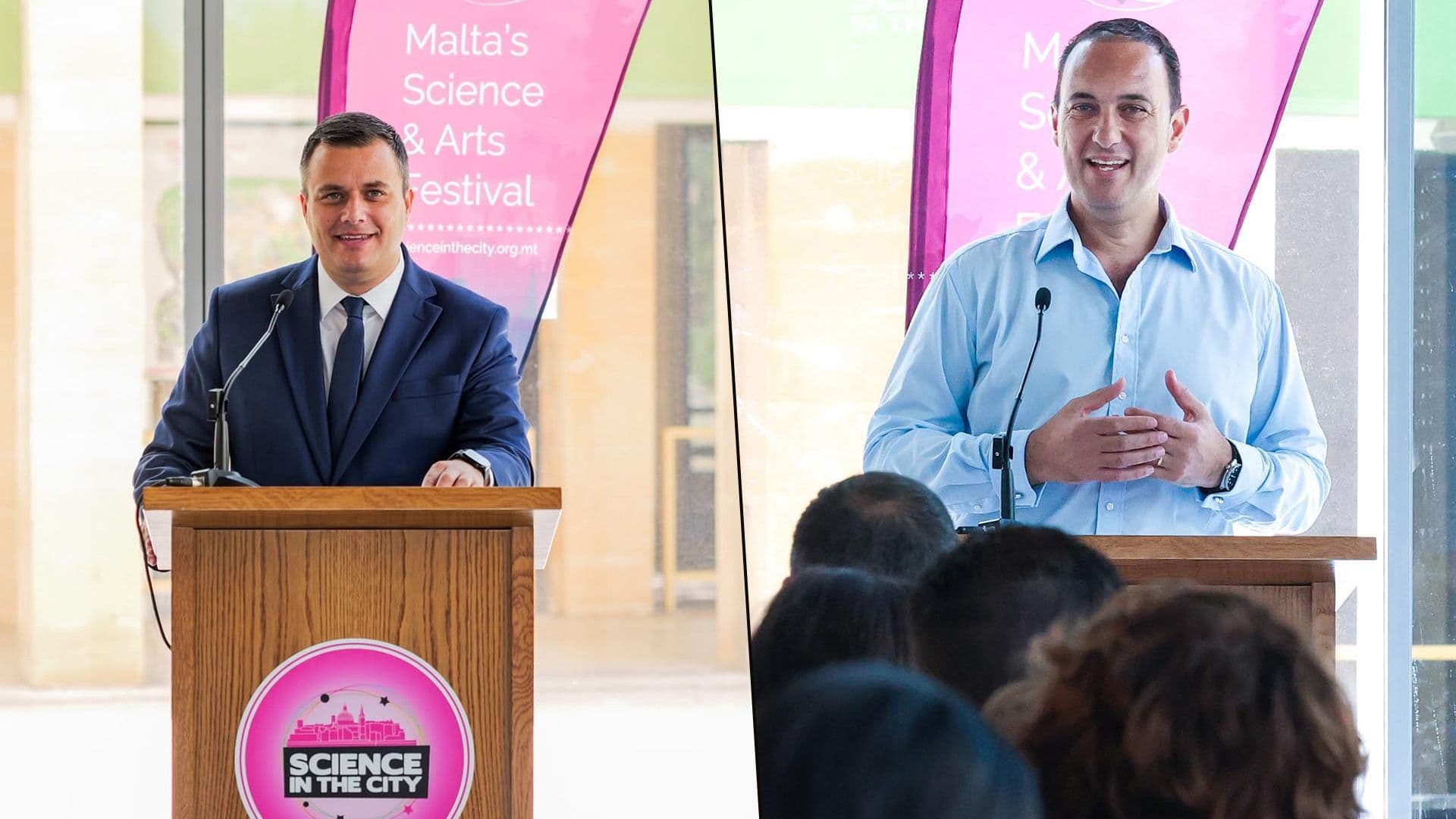
Science in the City will return this year with a programme designed to bring science and research closer to the public through a blend of research, the arts, education and creativity.
Held under the theme Research, Resist, Reimagine, the festival will explore how research can help people better understand the world around them, challenge established ideas and inspire new possibilities for the future.
The festival was officially launched by Minister for Justice, Research and Innovation Clifton Grima and Minister for Education and Sport Byron Camilleri. Both ministers highlighted the importance of making science, research and innovation more accessible while encouraging curiosity, creativity and critical thinking among children and young people.
Minister Grima described Science in the City as an important platform that connects research and innovation with everyday life.
He said research and innovation have a direct impact on areas including healthcare, climate resilience, digitalisation, artificial intelligence, sustainable development, mobility and environmental protection.
He stressed that research should not remain confined to laboratories, universities or academic publications, but should be presented to the public in a way that is accessible, relevant and easy to understand.
Minister Camilleri emphasised the educational value of the festival, saying science education should be closely linked to practical experiences and real-world research.
He said initiatives such as Science in the City help inspire curiosity and encourage more young people to explore opportunities in science, mathematics and technology.
Organised since 2012, the festival has grown significantly over the years. Attendance has increased from around 12,000 visitors at its first edition to more than 33,000 annually.
More than 100 organisations have registered to participate in the 2026 edition, including research institutions, educational bodies, arts organisations, NGOs, student organisations, industry representatives and public sector entities. Around 35,000 visitors are expected this year.
The festival also extends into schools through the Researchers at Schools programme, which links classroom learning with interactive research activities using a STEAM approach.
During the 2026/2027 academic year, the initiative aims to reach more than 40 schools, 5,000 students and 80 educators. Professional development opportunities for teachers will also focus on science communication, creative teaching methods, inclusion and digital literacy.
This year's programme includes pre-festival activities until 23 September, the main street festival on 25 and 26 September, and a performance festival on 6 and 7 November.
#MaltaDaily