Plato’s Allegory Of The Cave Through Għar Dalam
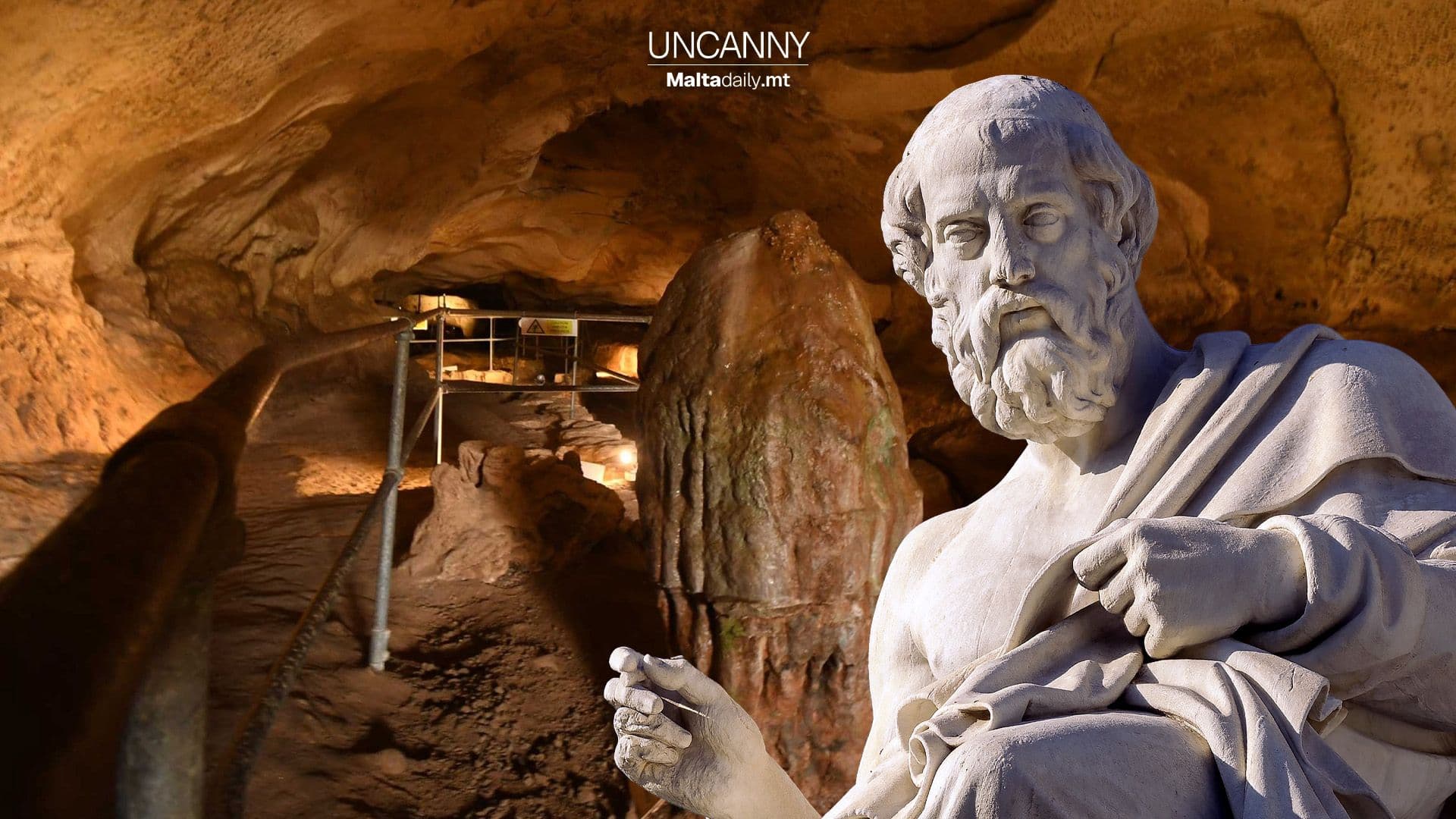
Imagine yourself deep inside Għar Dalam. The air is cool and the walls are damp.You are chained and facing the cave wall. You have been here for so long and you feel heat. There’s a fire behind you but you have no idea. This is where the illusions are created.
Behind you, people are walking in front of the fire and holding up figures. They cast shadows on the wall you are forced to stare at. Shadows of trees, birds, people. You give them names and believe them to be real. For you, this is reality.
One day, to your surprise, your chains are loosened. You get up and turn around for the first time and see the fire. Your eyes hurt. As your sight adjusts, you realise that the shadows on the wall were not the forms themselves. Your worldview shakes.
You run further out towards the cave’s mouth and out into a prehistoric Birżebbuġa. You are suddenly blasted with direct sunlight. Adjusting your eyesight again, you realise there are colours. There are birds and trees far bigger, and more real, than the figures whose shadow you saw. You see the truth.
You run back inside to warn the others who are chained. You try to explain that what they see are not only shadows of puppets… But that those puppets are based on real trees and birds and skies and people. They laugh at you. They call you mad. They prefer the shadows…
This is Plato’s Allegory of the Cave.
The Greek philosopher, a student of Socrates and a teacher of Aristotle, was active in the 400s BCE in Athens.
His work has been so consequential that Alfred North Whitehead (1861-1947) once said: ‘the European philosophical tradition […] consists of a series of footnotes to Plato.’
Plato was known for many things, but here we see his notion of the Forms. For Plato, the world we see around us is mere representation. These representations are shadows of the Forms. Put it like this: there are many triangles you can see. You can draw one now. But the PERFECT FORM of a triangle is what is most real.
Where are these Forms exactly? Well, they are only accessed through reason. For Plato, the perfect triangle cannot exist physically. The World of Forms, where Justice, Beauty, Goodness, and Perfect Circles exist, can only be accessed through the intellect, not the senses.
Does this sound familiar in some way? Well, you need not look any further than the Matrix film!
Plato’s ideas have been so influential that they still influence pop culture. The entire premise of us being in a ‘fake’ world and need to access a more ‘real’ one is an expression of this Platonic notion.
Even when you hear people say, ‘we live in a simulation, bro’, you’re essentially hearing an echo of Platonic philosophy.
Plato’s philosophy was eventually ‘revived’ through Neoplatonism, which, along with Aristotelianism, massively impacted even central tenets of today’s religious traditions, including Christianity! Of course, the Platonic tradition is merely one of many in Western philosophy.
Plato’s student, Aristotle, disagreed with his teacher. For him, Forms were not floating beyond Nature. They existed within each thing itself as an organising principle.
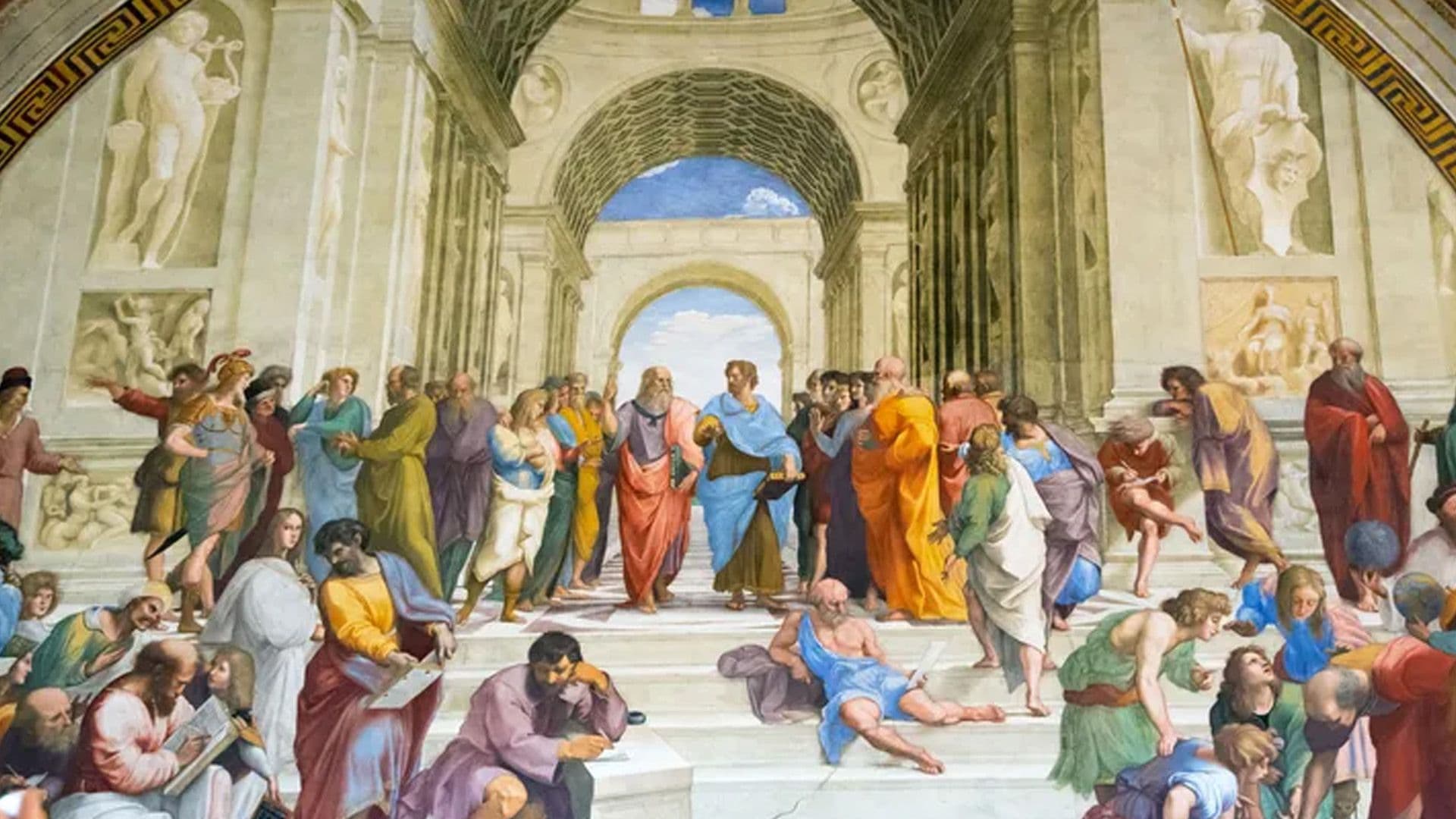
A circle’s Form exists only in the circle itself, not apart from it. In Raphael’s ‘School of Athens’, Plato points up, Aristotle points to the world. There’s also a problem when it comes to the content of Truth. Plato assumes he knows what the True world is. But his logic could be used to say anyone else’s truth is just another shadow. There’s some Inception for you!
Later thinkers called nominalists also posed a challenge. They argued ideas like Truth and Beauty are not discovered but constructed and named by us after the thing itself exists.
You can thank Franciscan Friar William of Ockham (1287-1349 AD) for that!
What do YOU THINK?
#MaltaDaily