

PL Or PN: Who Can Actually Take Malta To The Next Economic Level? - Prof. Stephanie Fabri
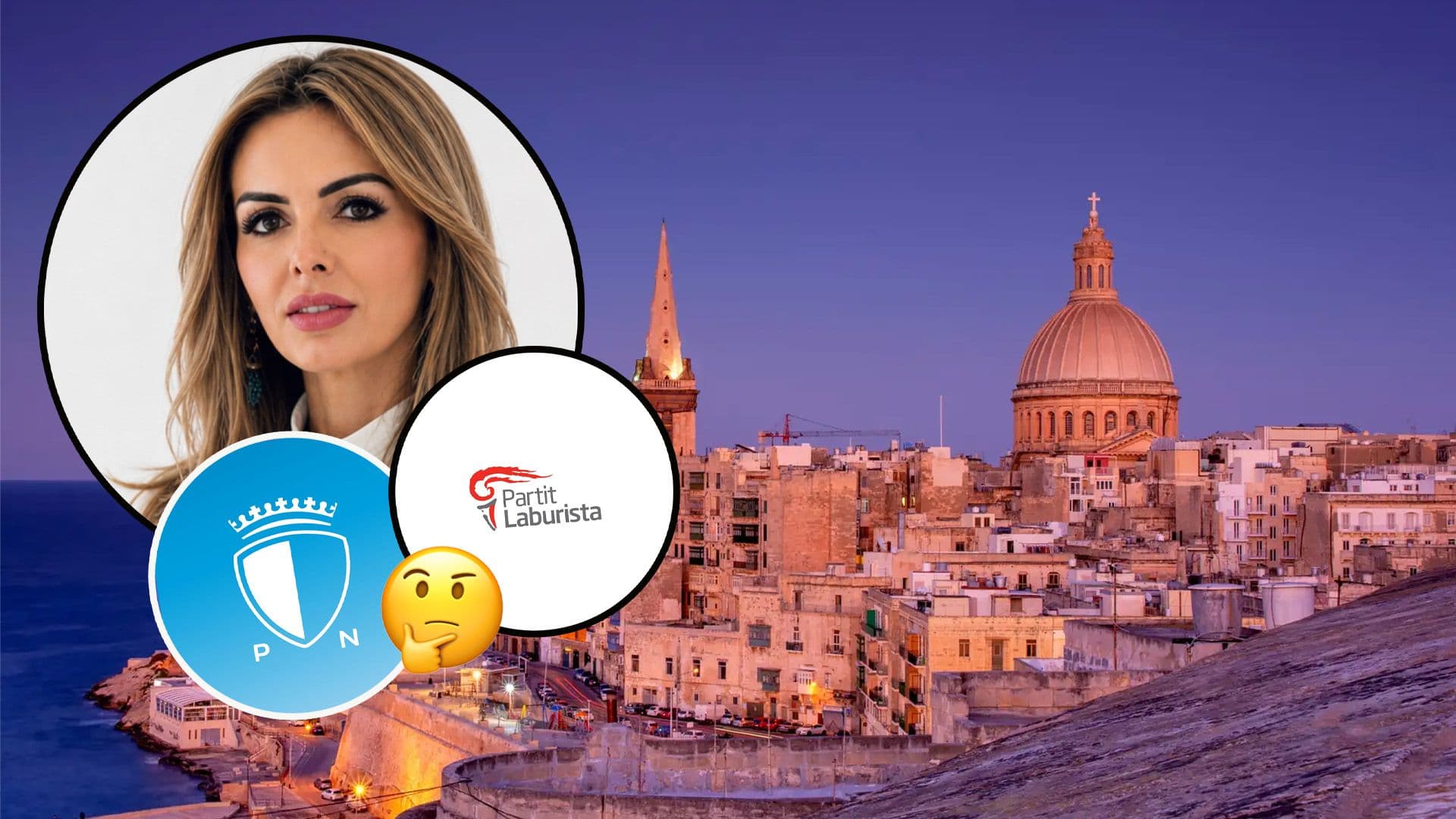
As Malta’s election campaign intensifies, both major parties are increasingly competing on one thing: who can leave more money in people’s pockets.
Tax cuts. Utility subsidies. Housing schemes. Stipends. Benefits. Grants. Cheques. Relief measures.
And politically, this makes perfect sense.
Recent discussions and surveys consistently show that purchasing power, inflation and affordability remain among the biggest concerns influencing voters. Both Labour and the PN understand this reality very well.
But while Malta is having a very loud election campaign, it is also avoiding a much bigger conversation. What kind of economy does Malta actually want to become over the next decade?
That is the election we are not really having.
The current campaign increasingly resembles a competition of distribution rather than a debate about transformation.
Both PL and PN are largely accepting the same underlying economic model and are instead competing over how the revenue generated from that model should be redistributed back to households.
Yet Malta has now reached a completely different stage of economic development.
For years, Malta’s model was built around acceleration. More investment. More construction. More tourism. More workers. More consumption.
And objectively, the model delivered economic expansion few European countries managed to achieve.
But Malta is no longer simply trying to grow. It is trying to sustain growth without damaging quality of life.
That is a far more difficult challenge. The issues dominating daily life today are no longer purely economic growth issues. They are pressure issues.
Pressure on infrastructure.
Pressure on roads.
Pressure on housing.
Pressure on energy systems.
Pressure on planning.
Pressure on public services.
Pressure on social cohesion.
Pressure on the environment.
Pressure on institutions.
And this is where the election becomes economically interesting.
Labour’s manifesto is strategically broader and more structured around long-term continuity. It is trying to reposition Malta around “quality growth” through Vision 2050, digital sectors, higher-value industries, wellbeing indicators, renewable energy, stronger pensions and social stability. Labour’s argument is essentially this: Malta has economic momentum, and changing direction too aggressively could destabilise that momentum.
The PN, meanwhile, is positioning itself more aggressively around correction. Its proposals focus heavily on affordability, disposable income, tax relief, utility reductions, administrative renewal and economic breathing space for families and businesses. Politically, the PN is trying to convince voters that Malta needs recalibration before pressure turns into fatigue.
In simple terms: Labour is selling continuity with evolution while the PN is selling relief with renewal. Both approaches are politically understandable. But neither side can avoid the harder economic questions forever:
How does Malta raise productivity without permanently relying on population growth?
How does Malta upgrade infrastructure without paralysing public finances?
How does Malta attract higher-value industries while preserving affordability?
How does Malta reduce pressure on roads, healthcare and housing without slowing economic momentum?
How does Malta remain competitive while improving governance, planning standards and quality of life?
These are not campaign questions.
They are statecraft questions.
And that is precisely why this election matters more than previous ones.
The next government will not inherit an economy in crisis. It will inherit an economy entering maturity.That put more pressure on the type of leadership required.
Running a fast-growing economy is one challenge.
Managing a complex, pressured and maturing economy is another entirely.
This is why the real election test is no longer simply who can promise more. It is who can transition Malta into its next economic phase without losing competitiveness, investor confidence, social stability and national quality of life in the process.
Malta’s future will not be decided by who makes the biggest promises during the campaign, but by who can actually lead a more complex, pressured and ambitious country the day after the election.
#MaltaDaily
