Maltese Research Project Uses AI To Push Large-Scale 3D Printing Forward
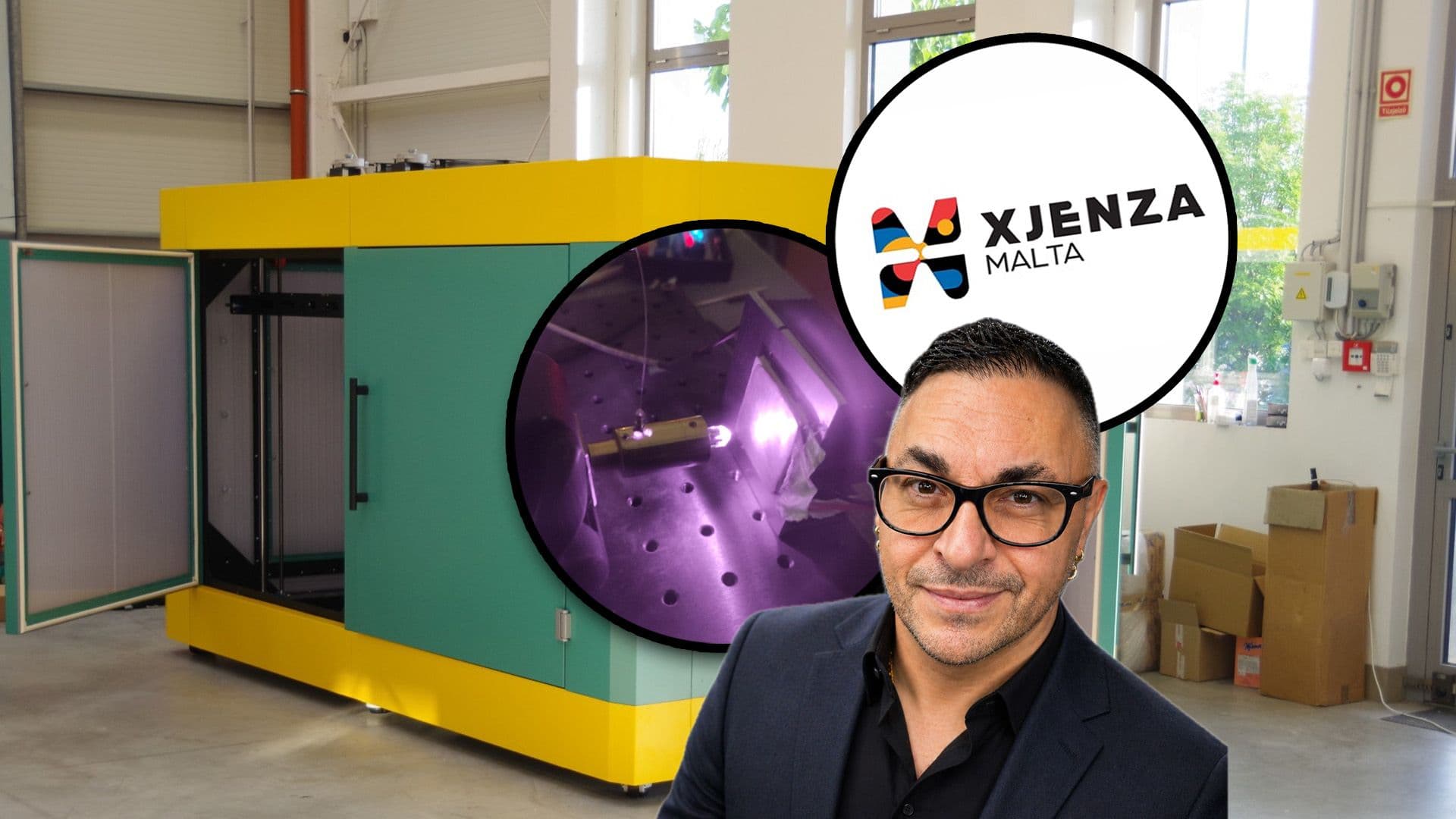
Laser Engineering & Development Ltd. is advancing a new Maltese research project aimed at solving one of the biggest challenges in large-scale 3D printing: how to print faster without sacrificing quality.
The project, called ALSPRINT-ANN and supported by Xjenza Malta under the Research Excellence Programme 2024, is exploring how advanced neural networks can help optimise the movement of large-format 3D printers. The goal is to reduce vibration-related defects such as ghosting and layer shifts, which become more pronounced as printing speeds increase.
Why This Matters
Large-format 3D printing has enormous potential for industrial manufacturing, but scaling up the process also creates new technical problems. As printers move faster over bigger build areas, vibrations and resonance can affect the surface quality and accuracy of the final part.
Through ALSPRINT-ANN, the team has been collecting and analysing motion data from the ORQA large-format 3D printer, using sensors mounted directly on the printhead together with motion logs and electrical data. That data is then processed and used to train AI models that can better understand how printing speed, acceleration, and vibration interact during real printing operations.
Turning Data Into Smarter Printing
As ALSPRINT-ANN approaches its final stage, the project has already delivered valuable insights into how large-format 3D printing behaves at higher speeds. The research confirmed clear links between printer movement, vibration, and print quality, giving the team a much stronger understanding of where and why issues such as ghosting and instability occur.
This work has helped lay the foundation for a more intelligent printing approach. Over the course of the project, the team developed and refined methods for collecting, processing, and analysing motion data from the ORQA printer, while also designing neural-network models intended to support smarter motion optimisation.
Importantly, the project has not only focused on studying the problem, but also on preparing a practical path toward implementation. The results are now feeding into an integration approach that can allow AI-generated optimisation profiles to be applied within the existing ORQA printer environment, bringing the technology one step closer to real-world industrial use.
Building On Maltese Innovation
ALSPRINT-ANN also builds on Laser Engineering & Development’s wider work in advanced manufacturing through the ORQA platform. By combining hardware development with artificial intelligence, the project aims to strengthen Malta’s role in high-value engineering and emerging manufacturing technologies.
The longer-term vision is to create a system where AI-generated optimisation profiles can be integrated into the existing ORQA printer ecosystem, improving print speed, consistency, and surface quality without requiring disruptive changes to the printer’s core control setup.
“Large-scale 3D printing has always involved a difficult trade-off between speed and quality. With ALSPRINT-ANN, we wanted to show that artificial intelligence can help break that trade-off. This project has brought us closer to a future where smarter printers can work faster, more accurately, and with greater reliability,” said Carmel Manicaro Busuttil, a.k.a. Ozzy Lino, Managing Director of Laser Engineering & Development Ltd.
Looking Ahead
As the project reaches its conclusion, the team expects ALSPRINT-ANN to support the future development of smarter motion-optimisation tools for large-format 3D printing, with potential benefits for advanced manufacturing applications where speed, precision, and repeatability are all critical.
The research also highlights how Maltese innovation can contribute to the future of AI-driven manufacturing by combining local engineering expertise with cutting-edge data and machine-learning methods. For more information, visit www.lasermalta.com
#MaltaDaily