

Malta Vision 2050 Unveils Six Flagship Projects to Transform the Nation’s Future
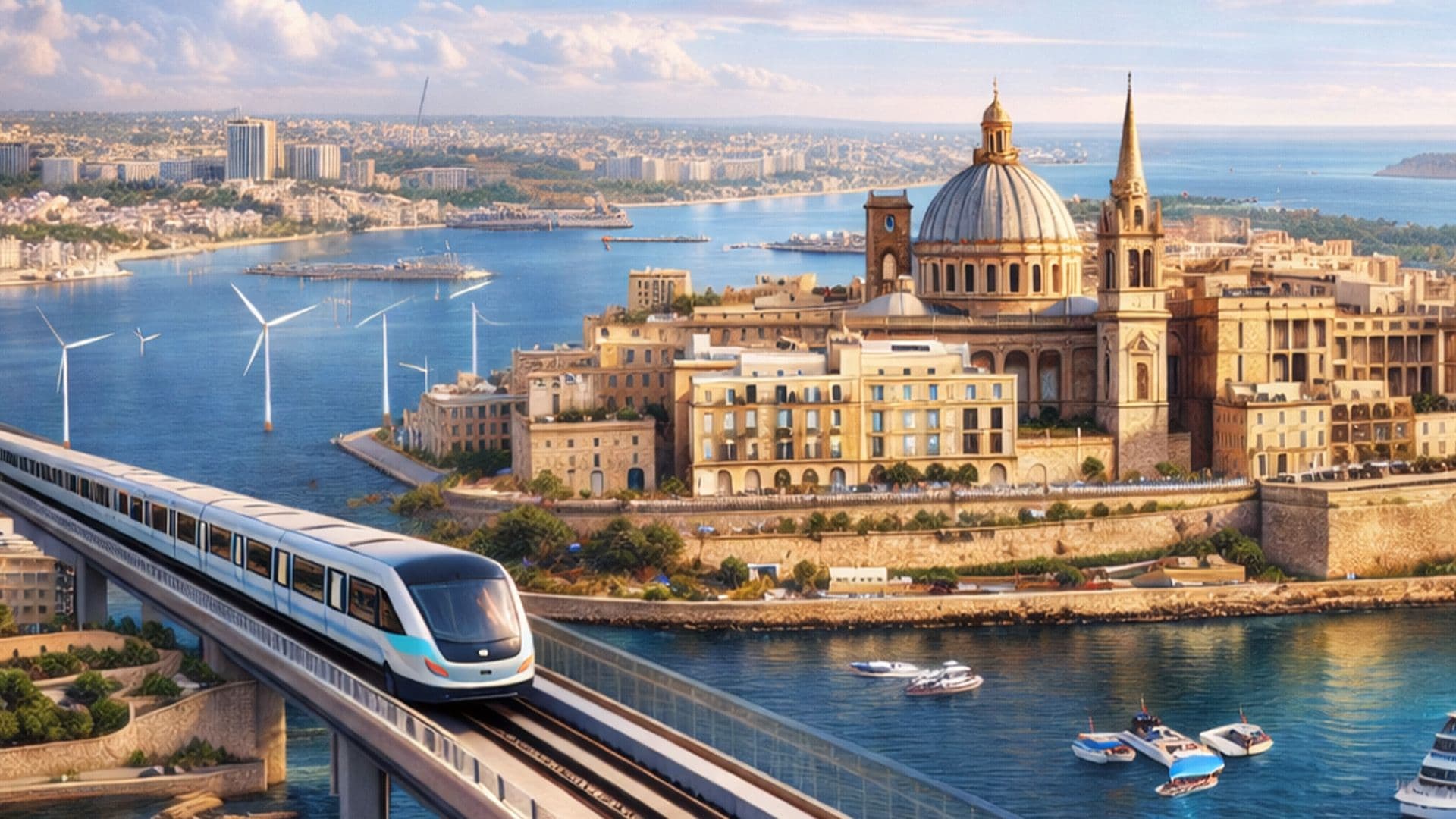
Malta Vision 2050 has set out an ambitious long-term roadmap for the country’s development, built around six flagship projects designed to enhance and transform the island from a position of strength. Framed as an evolutionary vision rather than a corrective one, the strategy provides a unifying framework across national policies and sectoral strategies.
The vision rests on six foundational building blocks and was shaped with the support of international experts who specialise in assisting countries to craft long-term national strategies. Drawing inspiration from successful models adopted in other countries around the world, Malta Vision 2050 seeks to ensure sustainable growth, resilience and improved quality of life for future generations.
With the announcement of these ambitious future projects, Malta Daily used AI to visualise what the island could look like once the initiatives are fully realised.
More details about the six flagship projects will be released in the coming days.
Modern, Seamless Mobility System
The first flagship project aims to introduce Malta’s first-ever mass transit system, marking a significant milestone in the country’s transport infrastructure. A new Mobility App will integrate different modes of transport into a single, user-friendly digital platform, making commuting more efficient and accessible.
The project also seeks to enhance coastal connectivity, reform and strengthen the public transport network to improve reliability and efficiency, and maintain road safety as a central priority.
Future-Ready Health System
The healthcare pillar focuses on expanding national surgical capacity at Mater Dei Hospital, the Gozo General Hospital, St Luke’s Hospital and the new Primary Health Centre in Paola. Investment in Gozo General Hospital will be further increased, while stronger integration between health services in Malta and Gozo will be achieved through enhanced air ambulance services and the introduction of drone technology.
Community-based primary care and regional mental health clinics will be expanded and modernised. Investment in digital health systems and responsible artificial intelligence will also strengthen diagnostic capabilities and improve the overall patient experience.
Future-Ready Education and Skills
Building on the 2024–2030 National Education Strategy, this pillar introduces a new curriculum framework centred on STEAM, digital competences, critical thinking, creativity and problem-solving.
The assessment system will be modernised to better reflect the skills required in a rapidly evolving economy. A €91 million school modernisation programme will deliver new learning spaces and digital upgrades. Student well-being will be supported through dedicated support teams, while a national skills intelligence system will be established to anticipate future labour market needs and align training and apprenticeship pathways accordingly.
Energy, Climate and Environmental Transformation
This flagship project includes a €300 million investment in a second electricity interconnector to ensure a stable and affordable energy supply. Renewable energy capacity will be expanded through the exploration of offshore wind and floating solar projects.
Efforts to strengthen water reuse will continue through new distribution networks and increased production of “New Water” in both Malta and Gozo. Reliance on landfill will be further reduced by generating high-quality energy and compost from waste.
A National Climate Resilience Plan will be developed to safeguard communities and critical infrastructure, alongside a national biodiversity protection initiative.
Green Malta
The Green Malta initiative envisions the transformation of Fort Campbell into a national natural park, while Manoel Island will be developed into a car-free cultural and ecological peninsula with pedestrian and cycling routes and restored historic bastions. White Rocks is also set to become a large-scale ecological coastal park.
In addition, 150 green spaces — including urban squares and gardens — will be created or regenerated. The national programme for heritage restoration and adaptive reuse will be strengthened to preserve Malta’s cultural legacy while adapting it for modern needs.
Grand Harbour Regeneration and National Gateway Renewal
The final flagship project centres on the revitalisation of the Grand Harbour through a comprehensive regeneration plan. Infrastructure upgrades and more sustainable operations will be delivered at Mġarr Port through a dedicated Gozo taskforce.
The Xewkija heliport runway will be extended to improve regional connectivity and operational flexibility. Luqa International Airport will undergo transformation through multi-million-euro private investment supported by Government, while the Freeport will be modernised to strengthen its regional role in freight transport and reduce impacts on surrounding communities.
Through these six flagship projects, Malta Vision 2050 seeks to position the country for long-term prosperity, resilience and sustainability, ensuring that national development remains forward-looking, coordinated and inclusive.
#MaltaDaily
