

Malta’s Population Could Reach 955,000 By 2081, Central Bank Analysis Shows
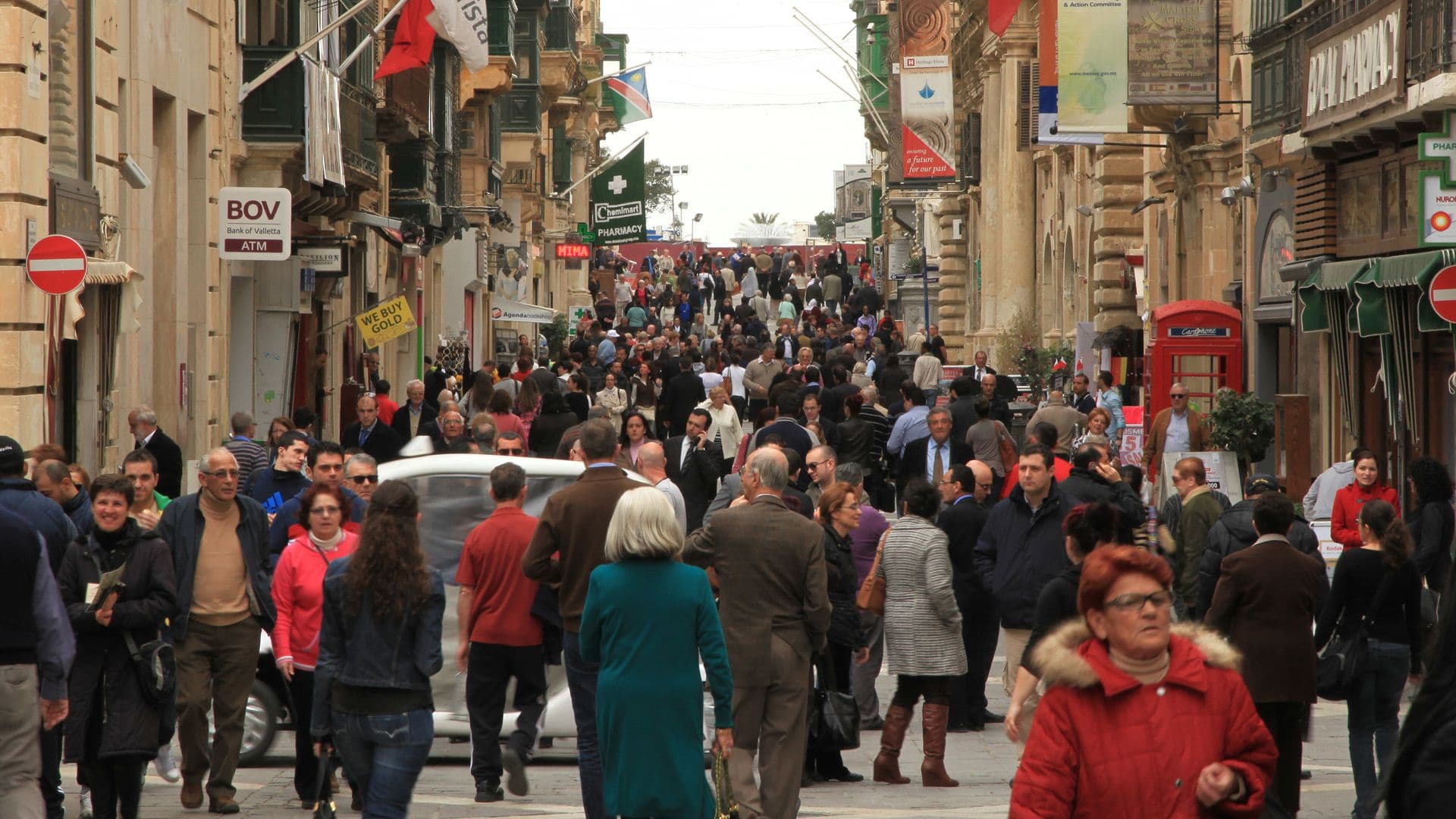
Malta’s population has already changed dramatically over the past decade, but one scenario suggests the islands could eventually approach a population once considered almost unimaginable.
One million people.
The Central Bank of Malta’s analysis of Eurostat’s latest demographic projections shows that under a higher non-EU migration scenario, Malta’s population could rise to 955,229 people by 2081.
Even after peaking, it would remain above 900,000 in the longer term.
The scenario assumes annual non-EU immigration flows around 33% higher than the baseline assumption.
For perspective, Malta’s population stood at 588,254 at the end of 2025.
So reaching the high-migration scenario’s peak would mean adding well over 350,000 residents to the islands.
But there’s another interesting detail buried in the report.
The Central Bank says sustained inward migration concentrated among working-age people could eventually create a population structure with a pronounced “bulge” in the middle-age groups, describing this as a demographic profile typically observed in Middle Eastern countries.
More migration would also help Malta deal with ageing.
Under the high-migration scenario, the ratio of elderly residents to working-age people remains lower than under the baseline, low-migration or no-migration scenarios.
So Malta faces a demographic balancing act:
Less migration means a smaller, older population. More migration keeps the workforce younger, but could push Malta towards a population approaching one million.
And somewhere between those two extremes is the Malta of the future.
#MaltaDaily
