

Envision 2050: Malta Charts A Smart, Sustainable And Regulated Future For Construction
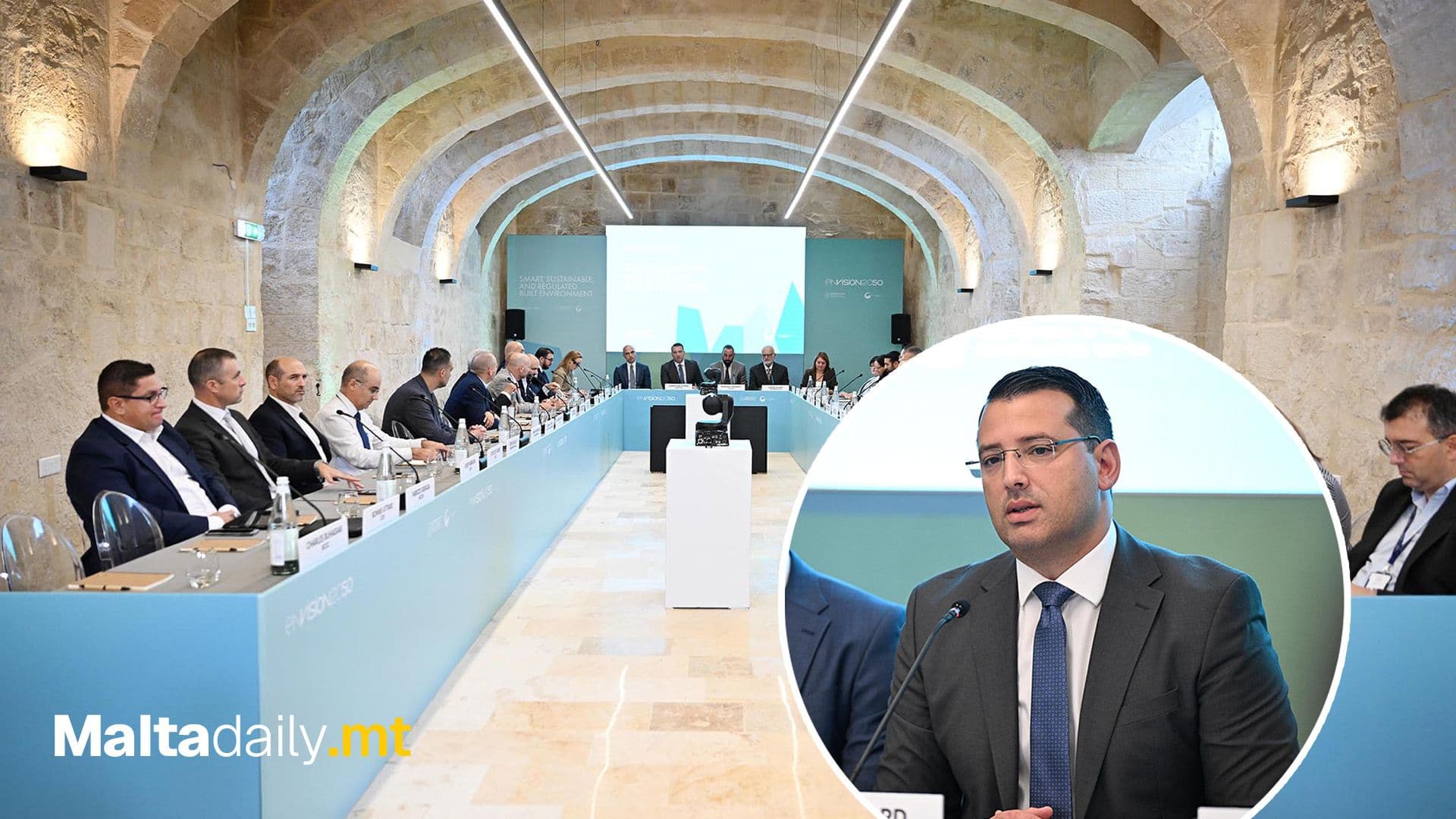
Minister for Justice and Reform in the Construction Sector Jonathan Attard, speaking at the conference “Envision 2050: Smart, Sustainable and Regulated Built Environment”, emphasized the pivotal role of public input and professional competence in the ongoing reform process within Malta’s construction sector.
“Citizens must have a stronger voice in the consultative process within the sector,” Minister Attard said, underlining the evolving role of the Building and Construction Consultative Council (BCCC). He explained that while the council has traditionally served as a forum for stakeholder consultation, it is now being positioned as a key instrument for public participation.
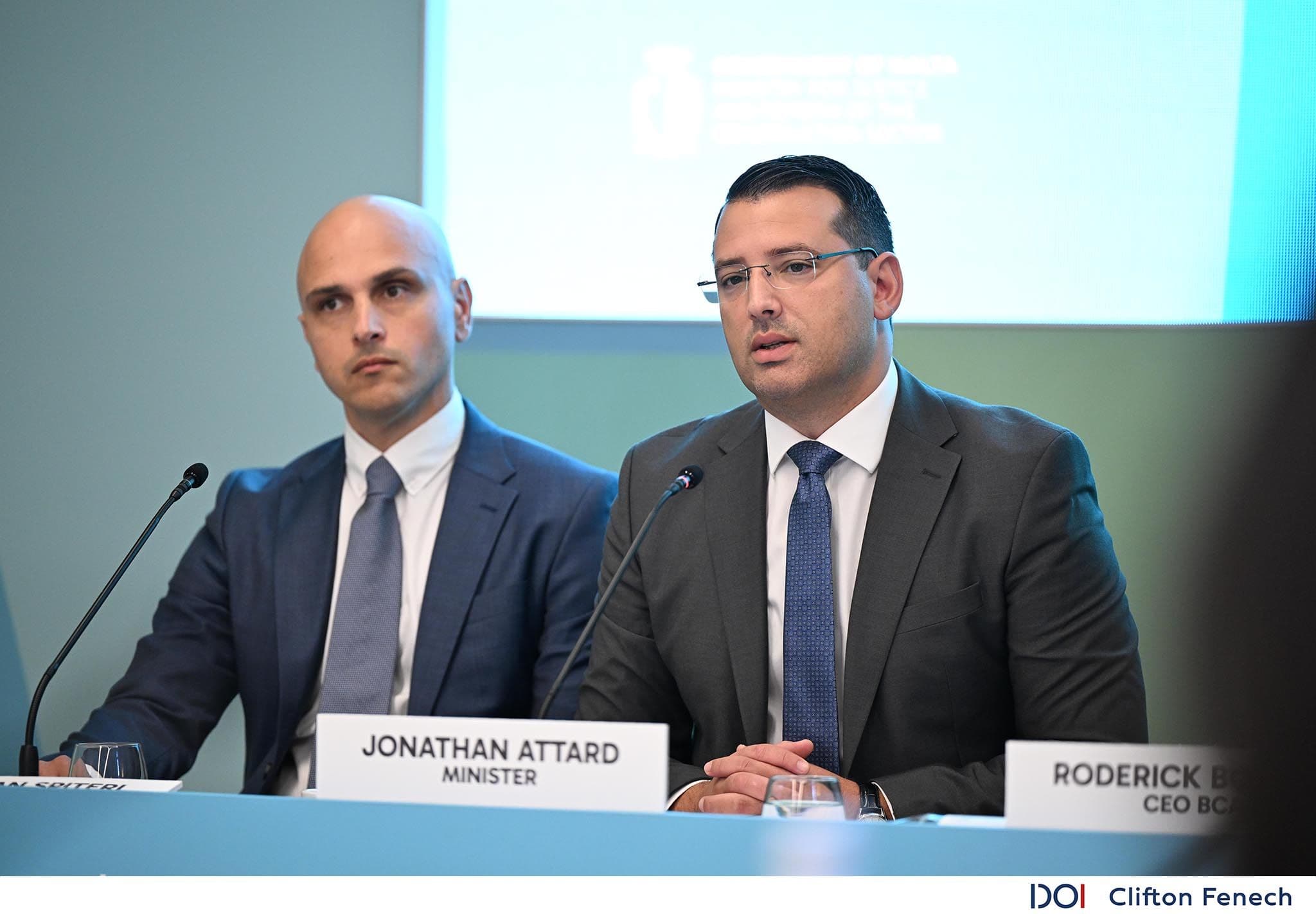
Minister for Justice and Reform of the Construction Sector Jonathan Attard addreses the BCA envision conference
The Minister noted that the construction industry has faced decades of underdevelopment, adding that the government is committed to a structured and sustainable reform process. “This marks the start of a new culture one that embraces expertise, ethics, and quality,” he stated.
Key initiatives already underway include the phased introduction of the National Building and Construction Code over three years, contractor licensing, and the rollout of Skill Cards by 2027. New services such as the 138 helpline, free legal and architectural advice, and joint inspections with the Occupational Health and Safety Authority (OHSA) have also been launched.
Minister Attard further highlighted sustainability measures, including grant schemes administered by the Building and Construction Authority (BCA) and the increased adoption of technology across the sector and regulatory operations. He concluded by inviting all stakeholders and public entities to actively participate in this transformational process. “Your presence today demonstrates our collective commitment to a future where Malta’s construction sector is truly smart, sustainable, and governed by robust and responsible regulation,” he said.
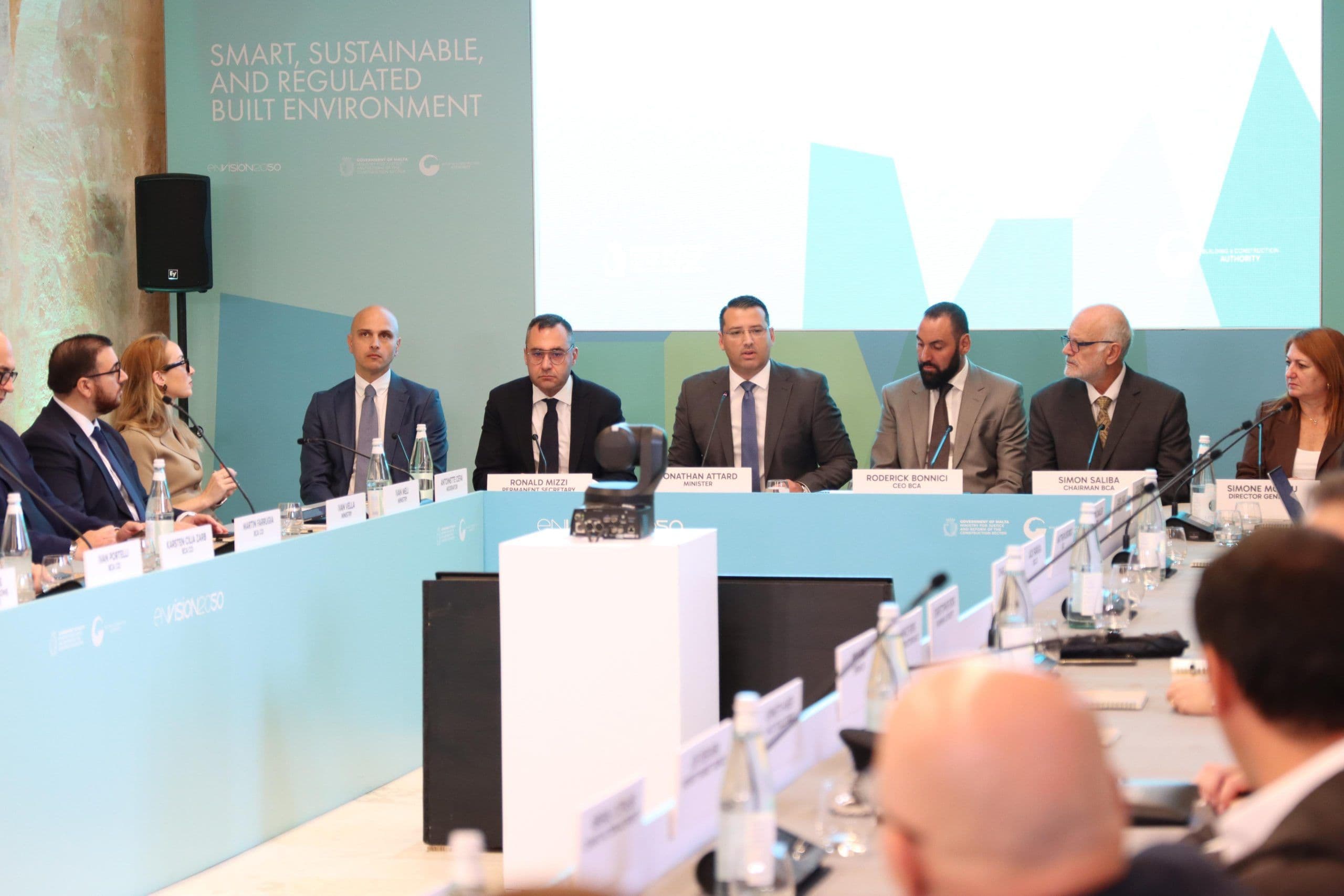
Perit Roderick Bonnici, Chief Executive of the Building and Construction Authority, explained that Skill Cards require participants to complete training in health and safety and demonstrate expertise in a particular trade. He emphasised the authority’s goal of promoting sustainable practices in line with the Vision 2050 roadmap.
“As the sector evolves, we ensure education reaches all parties involved—professionals, contractors, builders, and labourers,” Perit Bonnici said. “Our system now regularly brings stakeholders together to discuss industry developments, enabling a more holistic approach to today’s and tomorrow’s challenges.”
Permanent Secretary Ronald Mizzi, responsible for coordinating Vision Malta 2050 within the Office of the Prime Minister, praised the forward-looking approach, noting that discussions like these shape the future of Malta’s built environment, from materials and skills to energy efficiency and regulatory compliance.
The event brought together a wide range of stakeholders, professional bodies, and partners, including representatives from the Occupational Health and Safety Authority, Planning Authority, Environment and Resources Authority, Chamber of Architects, Chamber of Engineers, Chamber of Construction Project Managers, Civil Protection Department, Police Corps, demolition and excavation contractors’ associations, building and contracting associations, Malta Developers Association, Property Market Authority, Enemalta, Water Services Corporation, Transport Malta, LESA, Department of Local Government, Infrastructure Malta, Superintendence of Cultural Heritage, Climate Change Authority, University of Malta, MCAST, the Building and Construction Consultative Council, and Regional Councils of Malta and Gozo.
#MaltaDaily
