

300 Residents Have Left Valletta Since 2013 Amid Transformation Into Entertainment Hotspot
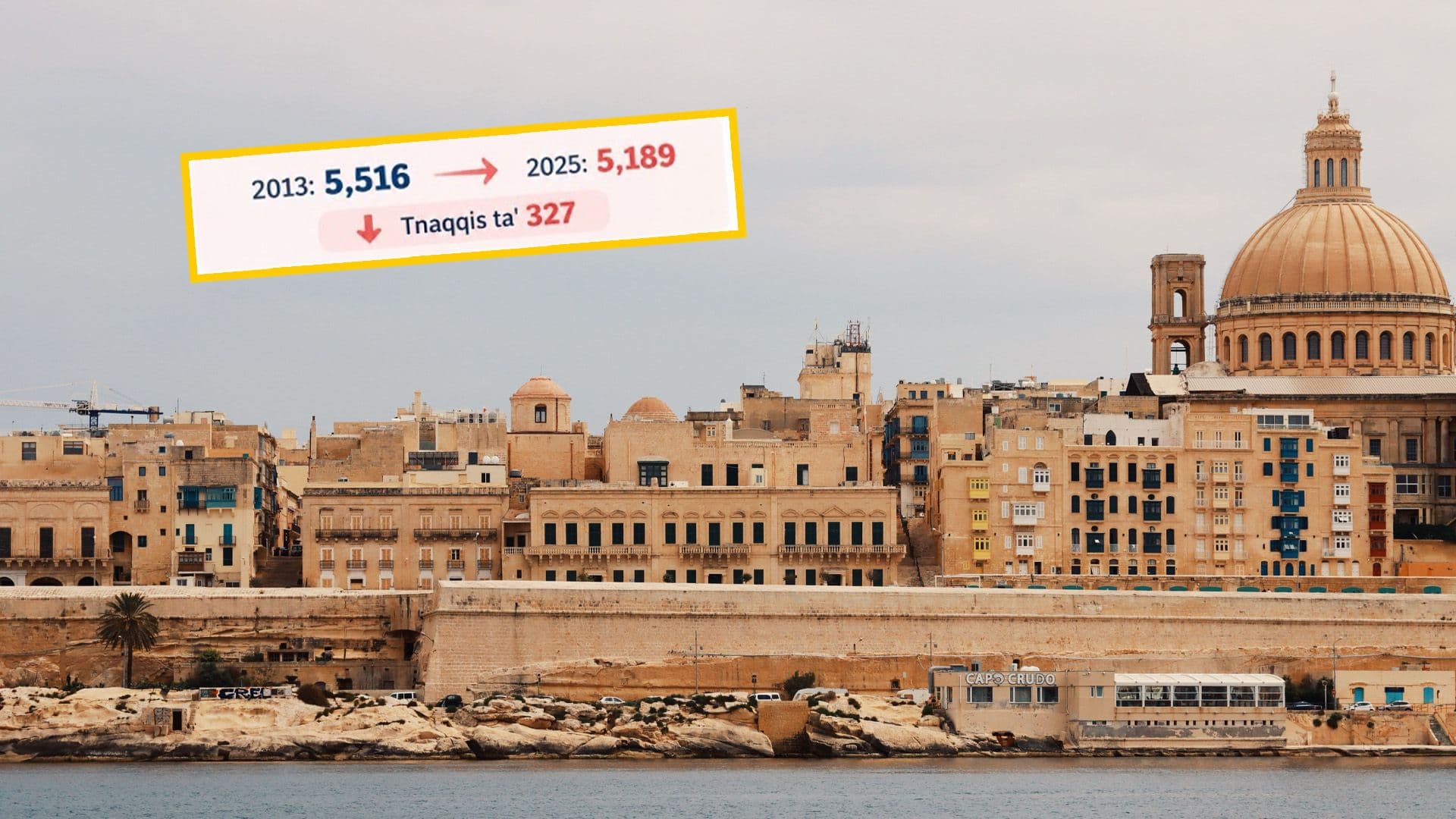
Malta’s capital city has undergone a remarkable transformation over the past decade, becoming a popular destination for tourists, restaurants, bars and nightlife. However, while Valletta attracts more visitors, its residential population continues to decline.
Figures presented in Parliament show that the population fell from 5,516 residents in 2013 to 5,189 in 2025, a decrease of 327 people, or approximately 6%.
The statistics were provided by Finance Minister Clyde Caruana following a parliamentary question by Opposition MP Mark Anthony Sammut. The population reached its lowest point in 2021, at 5,163 residents, before stabilising.
Regeneration projects have revitalised Valletta, transforming quiet streets into thriving commercial and entertainment areas. However, rising property prices, growing demand for tourist accommodation and the conversion of homes into commercial establishments have raised concerns about the city’s future as a residential community.
Residents have repeatedly complained about excessive noise and the growing number of outdoor catering establishments occupying public streets. In 2024, protests were organised against the expansion of outdoor dining, while others expressed concern over traditional neighbourhood shops being replaced by businesses catering mainly to tourists.
Although regeneration has brought investment, restored historic buildings and created economic opportunities, the figures raise questions about balancing commercial success with residents’ needs. While the statistics do not explain why people have left, they highlight concerns about Valletta becoming a city for visitors rather than those who call it home.
#MaltaDaily
